
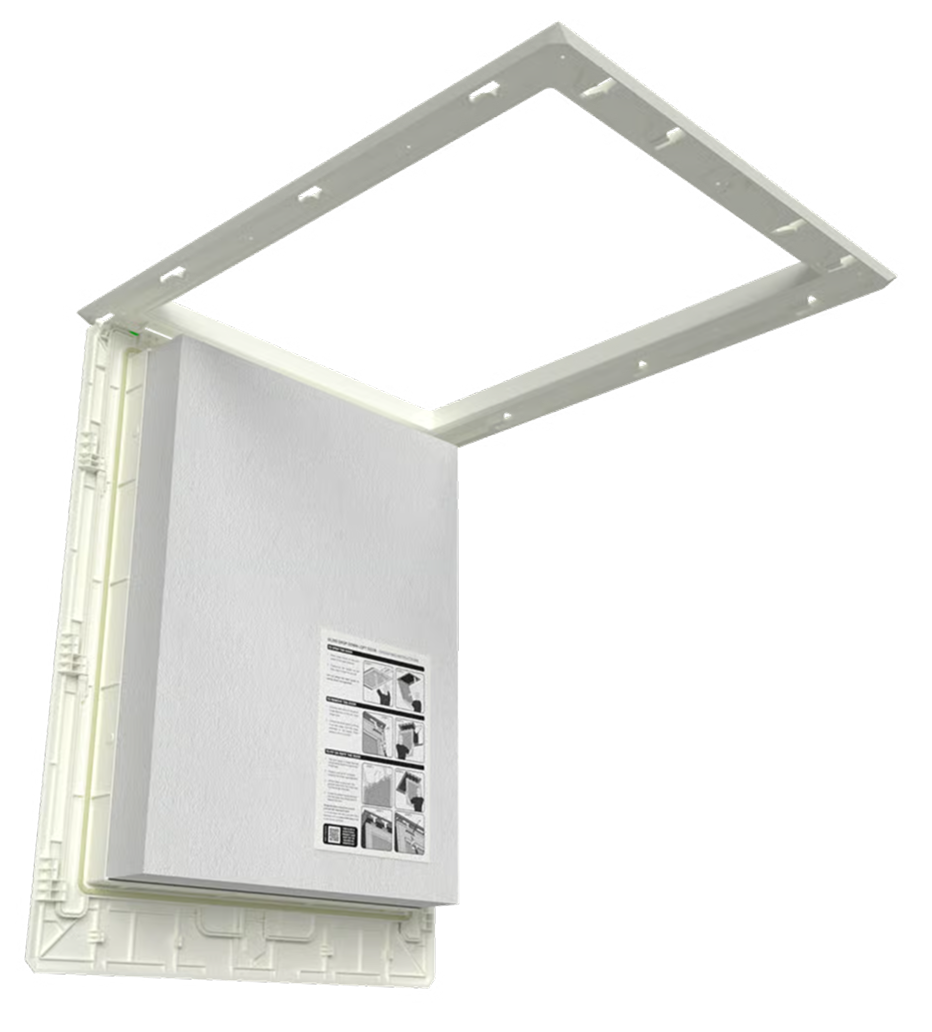
Have Your Loft Doors Been Tested Under Negative Pressure?
The GL250 range performs under pressure, exceeding air tightness requirements under both positive and negative pressures. It doesn’t simply meet regulations - it goes beyond
Learn more about the GL250 range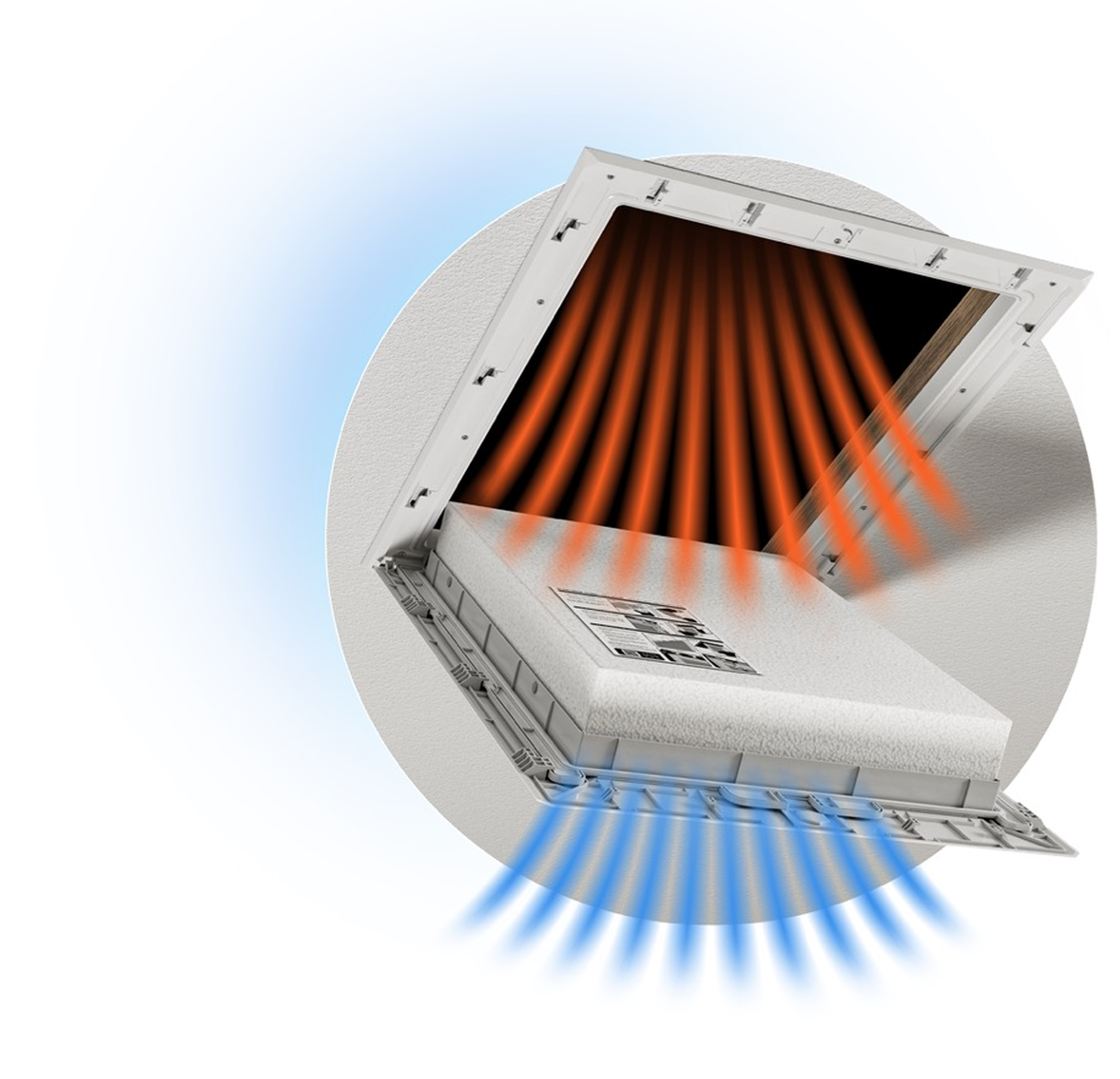
Independently Tested Under Both Positive and Negative Pressure Conditions
Independently tested by the BRE in accordance with BS EN 13141-1:2004 (test report no. 283-506). The table shows the tested air leakage rates of our door under both positive and negative pressures, and how they compare to the requirements of the standards.
I want to learn moreBuilding Regulations Part L ‘reasonable limit’ for air permeability of buildings m³/h.m² at 50Pa
BS 5250 ‘Well Sealed Ceiling’ requirement for a loft door m³/h at 2 Pa
< 10
REQUIRED
< 1
0.07
POSITIVE
0.02
0.19
NEGATIVE
0.05
The GL250 Range
The GL250 range of loft hatches present a solution for every installation with various insulation options.
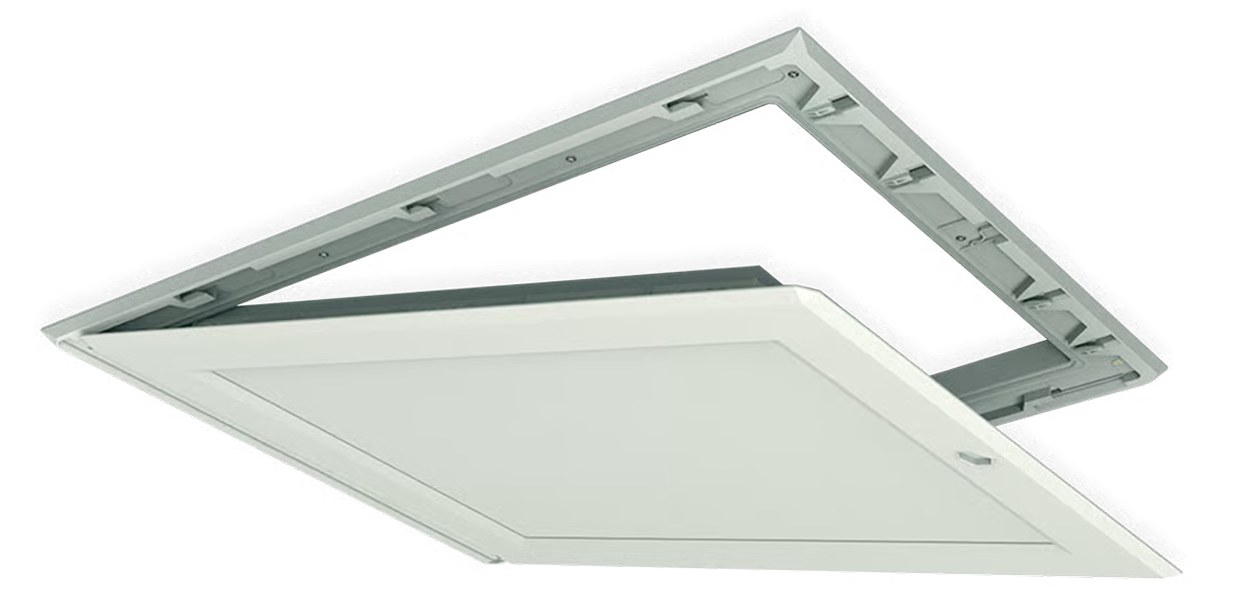
0.35 W/m²K Loft Access Door - 60mm PU
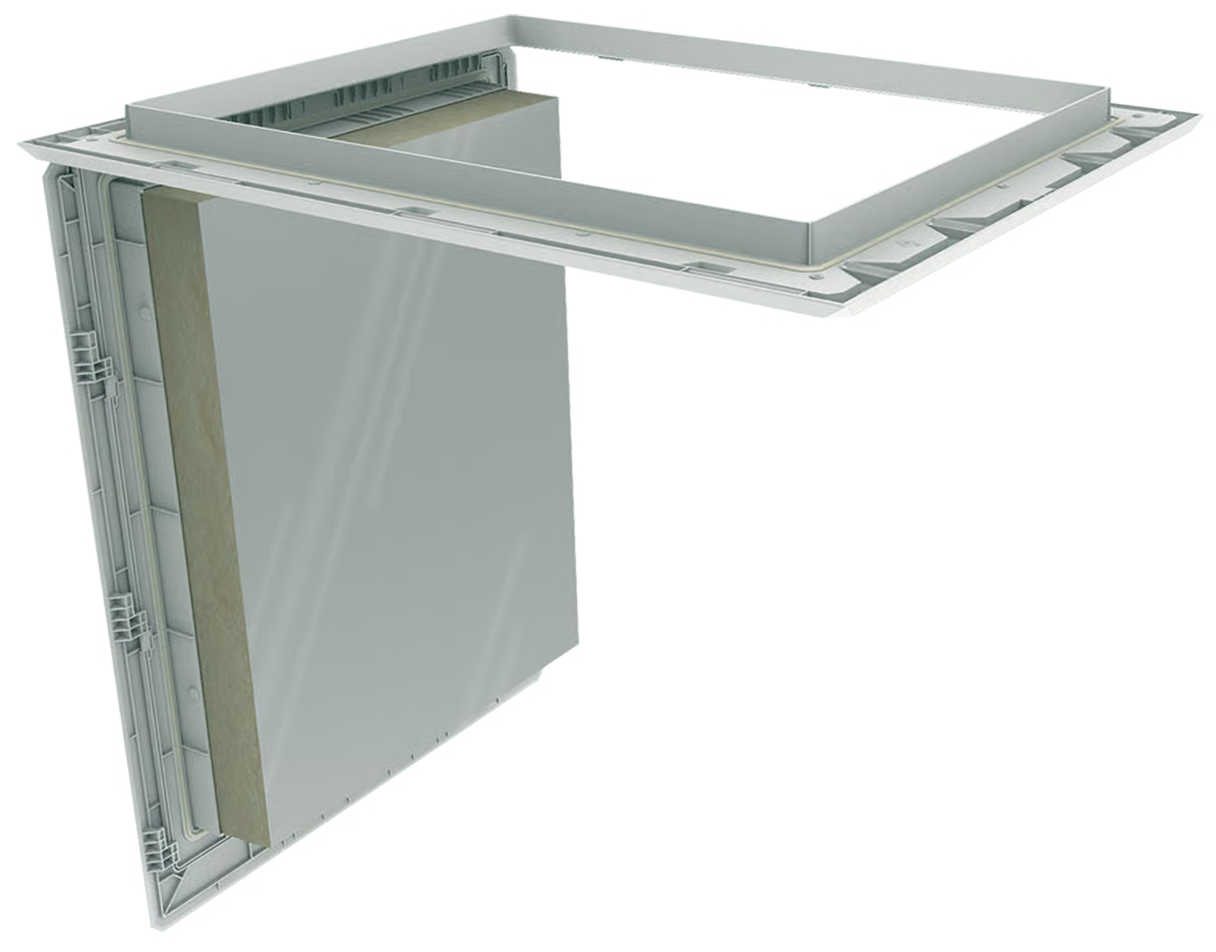
0.15 W/m²K Loft Access Door - 150mm PU
Exceeding Regulations at Every Point
Finding products to meet or align with the requirements of Part L of the building regulation can be tricky. The GL250 range has been designed and manufactured here in Britain to not only meet but exceed these regulations in a single product. With the GL250 range, you don't just specify a product, you specify regulatory compliance.


Frequently Asked Questions
We understand that you may have questions about our loft hatches, that’s why we’ve pulled together a list of the most frequently asked questions.
Has your loft hatch been tested under both positive and negative pressure?
During mandatory air permeability testing of new build homes, fans will be used to pressurise and depressurise the building to monitor the levels of air leakage from the built envelope. These changes in pressure will cause accessible openings such as windows and doors to be pushed tightly onto their seals in one instance and pulled harshly away from them in the next. It is under the influence of these extreme negative pressures that a loft access door can be the most susceptible to bowing away from its air seals, creating an air leakage path.
When testing a loft door to ensure it meets the requirements of both Part L of the Building Regulations and BS 5250 with pressures up to 50 Pascals, it is important to test the door under both positive and negative pressures. Pushing the door onto its seals makes it easy to get a good result, but the true test of a door is under negative pressure, that could be the difference between a pass and a failure of the air permeability test on site.
Can your supplier provide an independent test certificate?
A product’s airtightness performance should be supported by clear, independent evidence.
When comparing loft hatches, it is worth asking whether the product has been independently tested, to what degree it has been tested and whether a test certificate is available. This should identify the product tested, the test standard used and the measured air leakage results. Independent certification provides an objective way to understand how a product is expected to perform.
Why are multiple catch points important on a loft hatch door?
Doors with only a hinge at one end of a rectangular opening and a catch mechanism at the other are susceptible to bowing along the long unsupported side of the door in use. Gravity over time can cause sagging, and the negative pressure of an air permeability test will amplify this effect.
Multiple catch points around the full perimeter of the door help hold the door tightly against the frame, maintaining consistent compression of the draught seal around the entire opening. This helps prevent the door from bowing under pressure and reduces the potential for unwanted air leakage.
A more effective seal can help limit the movement of warm, moisture-laden air into the loft space, reducing the risk of condensation while supporting the building’s overall airtightness performance. This is particularly beneficial during air permeability testing and can contribute towards achieving and exceeding the performance expectations of Part L of the Building Regulations.
The multiple catch point design of the Manthorpe GL250 range was specifically designed with air tightness as the primary consideration after concerns were raised from multiple national housebuilders about their builds failing the air permeability test due to ‘leaky’ loft doors that had a traditional hinge/opposing catch arrangement.
After the effectiveness of the door was demonstrated under both positive and negative pressure scenarios, the door was directly specified by the leading housebuilders and subsequently adopted by several others. In the 15 years since its launch in 2011, no reported failures of the air permeability test have been attributed to the GL250 loft access door.
What should I look out for when assessing the suitability of a loft access door?
Airtightness claims are strongest when supported by independently verified test data. Test certification measuring air leakage rates across a range of pressures provide a clearer indication of performance than product descriptions and marketing claims alone.
It’s also worth considering how the loft hatch has been designed. Factors such as the sealing system, resistance to door bowing, the number of catch points and performance under both positive and negative pressure conditions can all influence airtightness.
The more comprehensive the supporting testing documentation, the easier it is to assess how a loft hatch is likely to perform as part of the building envelope.